Story is the only tradition that belongs to everyone and excludes no one.
Long before we built cathedrals or cities, before we had printed pages or podcasts, we had stories. Told by firelight, whispered to a child, written on cave walls. Story was how we remembered who we were. It was how we passed down warnings, wisdom, and wonder.
Every culture has its own way of keeping that flame alive. Some use drums, others hymns or poetry. The act is the same: one person leaning toward another, saying, Listen. This matters.
Storytelling is our most universal tradition. Older than language, stronger than borders, endlessly adaptive. Yet in a world that scrolls faster than it speaks, we risk forgetting how sacred it really is.
The inheritance we don’t name
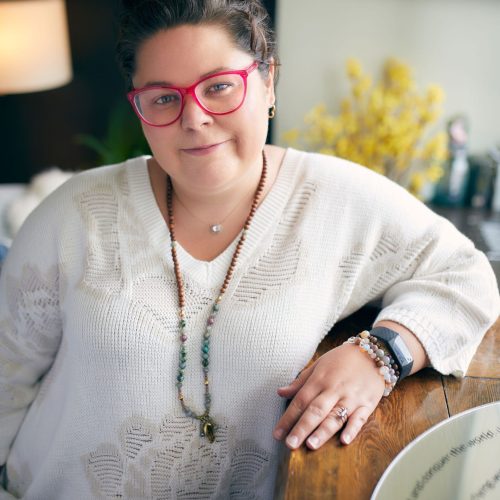
As a ghostwriter, I’ve spent my life gathering other people’s stories and shaping them into books that change how we see ourselves and each other. Before I ever held a publishing contract, I learned the essence of storytelling the old way: listening.
My grandmother told stories as if the world depended on them, and in some ways, it did. She’d sit at the table after dinner, her hands still smelling of soap and lavender, and begin with, “Let me tell you…” That phrase alone could hush a room. We all leaned in, not because the story was new, but because the telling made it so.
That’s what we inherit through tradition. Not just facts or folklore, rhythm. The cadence of a voice. The trust that someone will keep listening. The unspoken agreement that stories are how we hold each other.
Stories as ceremony
I often think of storytelling as a kind of ceremony. One that doesn’t need incense or sacred texts, only presence. Each time we share a story, we invite another person into our inner landscape. We offer them a bridge between their experience and ours.
In retreats around the world, I’ve seen how stories cross every barrier: age, culture, language. Around a fire in Fiji, a woman once told how her grandmother used the ocean as a clock, measuring time by tides instead of hours. In Costa Rica, a man spoke of planting trees for every year his parents had been married. In those moments, something quiet but powerful happens. Strangers become kin.
Story is the only tradition that belongs to everyone and excludes no one.
The modern firelight
Today, our firelight looks a little different. It’s a podcast microphone, a social post, a book launch, a voice note sent across oceans. The platforms have changed, the instinct hasn’t. We still gather (digitally, virtually, spiritually) to tell each other who we are and where we come from.
The danger isn’t that the tradition will disappear. It’s that it will lose its depth. When stories become marketing instead of meaning, when we rush to produce instead of reflect, we forget that storytelling was never meant to sell. It was meant to connect.
Each time I write a book with someone, I remind them: you’re not just building a brand. You’re building lineage. You’re adding another link to an unbroken chain that started the first time a human said, “I was here.”
The borderless tradition
I’ve told stories from all over the world. I’ve written for CEOs and shamans, scientists and poets. What strikes me every time is how little separates us.
The details change — accents, recipes, rituals — the themes are the same: love, loss, belonging, transformation. Storytelling dissolves borders faster than politics ever could. It reminds us that humanity has more in common than in conflict.
Stories are how traditions travel. From grandmother to grandchild, from one culture to another, from past to possible. They are what migration leaves behind and what memory carries forward.
Carrying the flame
In a way, all of us are keepers of the flame. The flame isn’t fame or success. It’s memory, the spark that keeps meaning alive. When we share our stories with sincerity and courage, we give others permission to do the same. That’s how communities heal, how retreats transform, how books change lives.
When we listen, truly listen, we become the new storytellers too. Every story needs an audience willing to hold it gently.
The world doesn’t need more noise. It needs more remembering. It needs more people willing to say, “Let me tell you…”
The living story
Tradition is not a thing of the past. It’s a verb, something we do every time we tell our truth and witness someone else’s. Every book, every conversation, every moment of vulnerability is an offering to the next generation.
So I’ll ask you what I ask every writer who sits down with me:
What stories are you carrying forward? Which ones are ready to be shared, reshaped, reborn?
Somewhere, a new storyteller is waiting by the fire. Ready to listen, ready to begin, ready to pass it on.
That, perhaps, is the most sacred tradition of all.
Your Next Fave Read
- The Storykeeper Manifesto: Why Your Most Powerful Business Asset Hasn’t Been Written Yet
- How to Turn Your Business Into a Book (Without It Reading Like a Case Study)
- What Is a Createcation — And Could One Change Your Book?
This piece first appeared in RetreatBoss Magazine, where I am Editor-in-Chief.