In thirty years of ghostwriting, I have never once worked with someone whose story wasn't worth telling. Not once. The problem was never the story — it was always the belief that the story was ordinary. Here's why the wisdom that feels most obvious to you is precisely the wisdom other people are desperately looking for, and how to know when you're ready to stop being the only person who has it.
The range is genuinely enormous — from $500 on Fiverr to $200,000 from top-tier literary ghostwriters — and most of what you'll find online makes it more confusing, not less. But ghostwriting pricing isn't arbitrary. It follows a logic. And once you understand that logic, the decision becomes a lot clearer. Here's a plain-English breakdown of every price tier, what you actually get at each level, and the question that matters far more than the price tag.
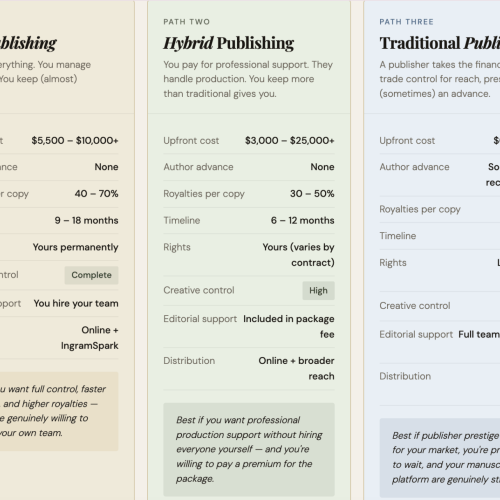
The publishing industry in 2025 is more complex — and more full of opportunity — than it's ever been. There are genuinely good options across the spectrum. But there's also a lot of noise, a lot of bad advice, and more than a few people willing to take your money before you know what you're getting into.
97% of books that get started are never finished. Not because the writers weren't talented. Because they didn't have the structure, the accountability, or the right support. That's not a writing problem. It's a strategy problem.
So before you choose a publishing path — let's make sure you understand what each one actually means.
If you've been paying attention to publishing news lately, you've seen the headlines. Fiction is booming. Nonfiction is declining. Romantasy is outselling memoirs. And somewhere in the back of your mind, a question has formed that you haven't quite let yourself finish: 'Maybe this isn't the right time for my book.' Let me stop you right there. Because the story the headlines are telling is not the story that applies to you.
The first time most people hear 'book coach,' they picture someone sitting next to them with a red pen and a disappointed expression. That's not a book coach. A real book coach is the person who walks beside you while you build your book yourself — making sure the foundation is solid, the structure holds, and the whole thing doesn't collapse on page forty-three. Here's what the job actually looks like, and how to know if it's what your book needs.
Let me tell you what most book writing advice gets catastrophically wrong. It treats writing a book as a discipline problem. A motivation problem. A time management problem. But for every Storykeeper I've worked with in thirty years — every founder, every leader, every person sitting on decades of lived and earned wisdom — the real problem has never been discipline. It's been structure. The 90-Day Book is what happens when you finally have the right one.
Most people looking for a ghostwriter have no idea what they're actually looking for — and the bewildering range of options (from $500 Fiverr listings to $150,000 literary agencies) doesn't help. After thirty years as a ghostwriter, including four New York Times bestselling collaborations, I can tell you that the price range isn't the confusing part. It's knowing what questions to ask. Here's exactly what to look for, what to avoid, and how to find the right person for your specific book.
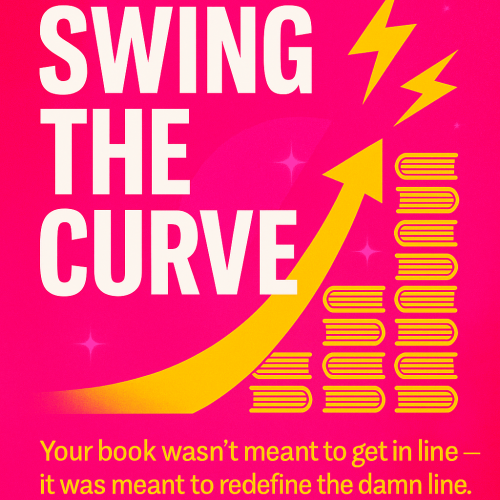
Most authors obsess over averages — average sales, average advances, average reviews — and then wonder why they’re stuck in the middle of the curve. The truth? The curve doesn’t need to be followed; it needs to be swung. The authors who win don’t chase benchmarks — they break them. They play the long game, build audiences before launches, and turn books into brand assets that compound for years. Forget average. Forget the curve. You’re not here to be predictable — you’re here to be profitable.
We use cookies to ensure that we give you the best experience on our website. If you continue to use this site we will assume that you are happy with it.